76 use cases
Data room use cases in Canada
Every page lists the documents that go in the room for that job, the Canadian rules that apply, the features to insist on and a ranking re-weighted for that kind of deal.
Deals and M&A
Buying, selling and combining Canadian businesses, from a family firm in Moncton to a cross-border carve-out.
 M&A A Canadian M&A data room holds the target's corporate, financial, tax, employment and contract records so buyers can review them under NDA. Sell-side due diligence Sell-side due diligence means the seller reviews its own business and builds the data room before buyers arrive. Buy-side due diligence On the buy side, the data room is where you test what the seller says against the documents. Private equity Canadian private equity firms use data rooms on both sides of the deal: to review targets, and to prepare portfolio companies for exit. Selling a business If you are selling a small or mid-size Canadian business, a data room keeps your financials, tax filings, contracts and staff records organized for buyers and their advisers.
  Family succession Family business succession in Canada usually involves an estate freeze, a family trust or a sale to the next generation under the intergenerational transfer rules in section 84.1 of the Income Tax Act. Carve-outs A carve-out sells one division of a larger group, so the data room has to show a business that never existed on its own. Joint ventures A joint venture data room runs in both directions: each partner reviews what the other brings, then the room becomes the shared record for the venture.
  Cross-border deals When a US or other foreign buyer acquires a Canadian company, the data room carries both countries' filings and diligence.
  Investment banking Canadian investment banks and M&A boutiques run data rooms for sell-side auctions, buy-side mandates, private placements and restructurings. Search funds A search fund lets one or two operators raise capital to find, buy and run a single Canadian business.
 Fundraising and capital markets
Rounds, funds, listings on the TSX, TSX Venture and CSE, exempt distributions and debt.
Startup fundraising A startup fundraising data room is a private online folder set where a Canadian founder shares the minute book, cap table, financials, IP and contracts with investors under NDA. Pre-seed and seed A seed data room in Canada can be small: incorporation documents, a clean cap table, founder IP assignments, the SAFE or note terms and a simple financial model. Series A A Series A data room holds the full legal, financial and commercial record a lead fund and its lawyers need to price and paper the round. Series B and growth A Series B or growth room looks closer to an M&A room than a seed room. Venture capital Canadian venture capital funds use data rooms in two directions: to review startups before investing, and to share fund documents and portfolio reports with their own limited partners, including BDC Capital and the fund-of-funds backed by the Venture Capital Catalyst Initiative. Angel investors Raising from Canadian angels, a startup needs a short, tidy room: the pitch, cap table, incorporation and IP documents, financial model and, where it applies, proof that the company is registered for a provincial investor tax credit. Investor reporting An investor reporting room is a standing portal where a Canadian company posts monthly or quarterly financials, board packs and shareholder notices for the investors entitled to them. Raising from LPs A fund marketing room holds the private placement memorandum, limited partnership agreement, track record and operational diligence documents that Canadian and foreign LPs review before committing. Family offices Canadian family offices use data rooms to review direct deals and fund commitments, and to keep the family's own records, such as trust deeds, holding company documents and estate plans, in one place with tight access for family members and advisers. Pension funds When a large Canadian pension plan invests in or buys a business, it runs institutional diligence through a data room: legal, financial, tax, ESG, cyber and governance streams, each with outside advisers. TSX IPO An IPO on the TSX needs a data room for underwriter and legal due diligence on the long form prospectus.  TSXV and CSE listings A TSX Venture or CSE listing, whether by IPO, capital pool company qualifying transaction or reverse takeover, needs a room where the exchange, sponsor, auditors and counsel can review the target business. Private placements A private placement data room gives prospective investors, agents and their counsel the documents they need to buy securities under a prospectus exemption.
  Flow-through financing A flow-through financing room holds the subscription and flow-through agreements, technical reports and, above all, the spending records that prove the exploration expenses renounced to investors were real and eligible. Debt financing A debt financing data room gives lenders, their counsel and advisers the financial, legal and collateral information needed to underwrite a loan.
 Legal, compliance and restructuring
Law firms, audits, regulators, Investment Canada and Competition Act reviews, CCAA and BIA files.
Law firms Canadian law firms use virtual data rooms to run deal and disclosure files for clients outside the firm network. Litigation In Canadian civil litigation, a data room gives each party a controlled place to exchange productions, expert reports and transcripts. Class actions Canadian class actions produce huge, multi-party document sets and, at settlement, files full of claimant personal information. Arbitration Arbitrations seated in Toronto, Vancouver, Calgary or Montreal rely on confidentiality, so a data room is a natural fit for exhibits, witness statements and hearing bundles. Internal investigations Internal investigations in Canada depend on privilege and discretion. Financial audits A data room gives a Canadian finance team one place to deliver the external auditor’s PBC (prepared by client) list, track open requests and keep year-end files secure. CRA audits When the Canada Revenue Agency opens an audit or sends an information request, the business and its advisers need to collect records fast and control what goes out. Board of directors Canadian boards use secure rooms to share board packs, keep minute books and run committee work outside email. HR and employee records In a Canadian deal or restructuring, employee records are some of the most sensitive files in the room. Regulatory reviews Regulators such as OSFI, FINTRAC and provincial bodies examine Canadian firms on a cycle and ask for policies, evidence and data in short windows. Investment Canada Act Foreign buyers of Canadian businesses must file under the Investment Canada Act, either a notification or, above the thresholds, an application for net benefit review. Competition Act review Mergers above the Competition Act thresholds need pre-merger notification to the Competition Bureau and a 30-day wait before closing.  Quebec notaries Quebec notaries handle real estate sales, hypothecs, corporate reorganizations and estates, often with buyers and lenders outside the province. Insolvency and BIA In Canadian receiverships, BIA proposals and bankruptcies, a Licensed Insolvency Trustee or receiver often has to sell assets quickly. CCAA restructuring Under the Companies’ Creditors Arrangement Act, a debtor with over C$5 million in claims restructures under court protection with a monitor watching. Tenders and RFPs Public bodies and Crown corporations in Canada use data rooms to share large tender files, site reports and drawings with qualified bidders, and bidders use them to build their own responses.
 Industries
Mining, energy, real estate, life sciences, technology and the other sectors that drive Canadian deal volume.
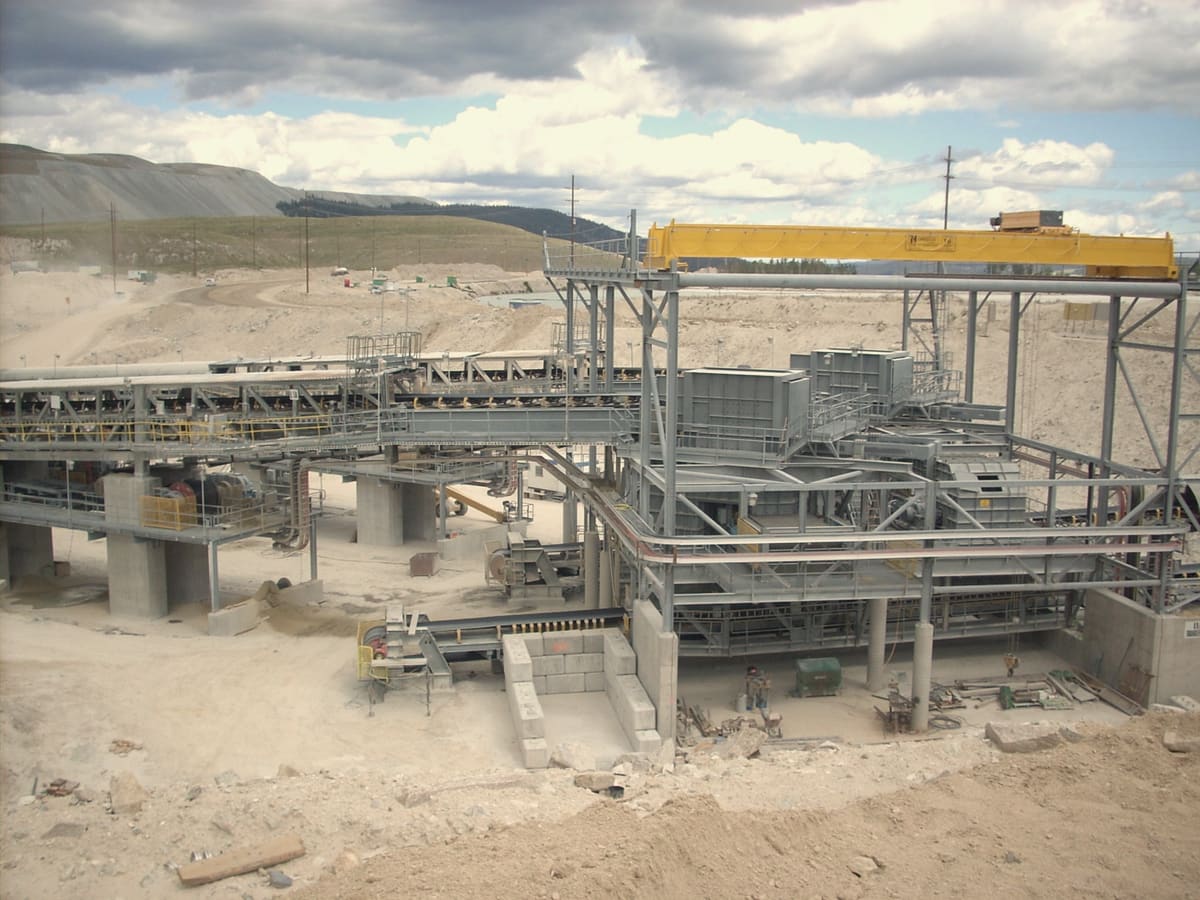
Real estate A real estate data room holds the title searches, leases, rent rolls, tax bills and building reports that a buyer or lender needs to price a Canadian property or portfolio. Commercial real estate A commercial real estate data room gives buyers, lenders and their consultants one place to review leases, estoppel certificates, environmental reports and operating statements for an office, industrial or retail asset. REITs Canadian REITs use data rooms for property acquisitions and dispositions, take-private bids, unit offerings and ongoing lender and trustee reporting.  Property development Developers use a data room to raise equity, secure construction loans and CMHC-insured financing, and sell sites or partial interests. Mining deals A mining data room holds the NI 43-101 technical report, drill and assay databases, mineral tenure records, permits and agreements with Indigenous communities.
  Oil and gas An oil and gas data room gives bidders the reserves report, land schedules, well and facility lists, production data and the AER liability position for a Canadian asset package. Renewable energy A renewable energy data room holds power purchase contracts, interconnection studies, land and permitting files, resource data and Indigenous partnership agreements for a wind, solar, hydro or storage project. Forestry A forestry data room holds the Crown tenure documents, mill permits, fibre supply agreements, softwood lumber duty records and certifications a buyer needs to value a sawmill, pulp mill or timber licence. Agriculture and farmland A farm or agribusiness data room collects land titles, quota records, production data, equipment lists, financing and tax files so a buyer or lender can value the operation. Infrastructure and P3 Canadian P3 procurements use a data room to give shortlisted consortia the project agreement, technical requirements, site reports and reference designs on equal terms. Construction Construction firms use data rooms to sell the business, raise capital, support bonding and manage disputes. Manufacturing A manufacturing data room holds plant and equipment records, customer and supplier contracts, trade and tariff files, environmental approvals and labour agreements. Trucking and logistics A trucking or logistics data room holds safety ratings, fleet records, driver files, customer contracts and contractor agreements. Indigenous economic development Indigenous development corporations use data rooms to review equity stakes in pipelines, power projects and mines, to work with lenders and loan guarantee programs, and to report to their communities.
  Life sciences A life sciences data room holds the regulatory, clinical, patent and manufacturing records a partner or buyer needs to value a Canadian biotech or pharma asset.
  Medical devices A medical device data room holds the Health Canada licences, quality system files, clinical evidence and ethics approvals a buyer, investor or trial sponsor must review. Healthcare A healthcare data room lets a buyer review licences, funding agreements, staffing and inspection records for a clinic, home care agency or long-term care home without exposing patient records. Technology and SaaS A SaaS data room gives a buyer or investor the IP chain of title, customer contracts, revenue metrics and security records of a Canadian software company. Fintech A fintech data room shows a buyer or investor that a Canadian payments, lending or wealth platform holds the right registrations and runs a working compliance program. Artificial intelligence An AI data room has to prove the company owns or has the right to use its models, code and training data. Telecom A telecom data room holds the spectrum licences, CRTC registrations, network records and ownership filings a buyer needs to assess a Canadian carrier, ISP or tower business. Cannabis A cannabis data room holds the Health Canada licences, security clearances, provincial retail authorizations and supply agreements a buyer must check. Insurance An insurance data room holds actuarial reports, capital filings, regulator correspondence and distribution agreements for an insurer or managing general agent. Banks and credit unions A data room for a credit union merger or bank deal holds loan portfolios, capital and liquidity reports, regulator letters and member materials under strict access control.
  Hotels and hospitality A hotel data room gives buyers the trading results, franchise agreement, property improvement plan, liquor licence and building records for a Canadian hotel or resort. Franchises Canadian franchisors use data rooms to deliver disclosure documents, keep proof of delivery and run franchise system sales. IP licensing An IP licensing data room shows a licensee or buyer what is owned, what is protected and what can be licensed, with CIPO records, prosecution files, chain of title and existing licences in one place. University research Canadian universities use data rooms to share invention disclosures, licensing packages and partnership files with companies and investors under controlled access.
 Professional practice sales
Selling or merging an accounting, dental, pharmacy, veterinary, brokerage or advisory practice.
Accounting practice sale Selling a CPA practice in Canada is mostly about transferring client relationships and files without breaking confidentiality rules. Dental practice sale A dental practice sale in Canada turns on production figures, active patient counts, staff and equipment, and on rules about who may own a dental professional corporation. Pharmacy sale Selling a pharmacy in Canada means showing prescription volume and margins, proving clean narcotic and controlled substance records, and meeting your province's ownership rules. Veterinary clinic sale Veterinary clinic sales in Canada are driven by consolidators and by veterinarian buyers. Insurance brokerage sale An insurance brokerage sale in Canada is the sale of a book of business: policies, renewals, commission income and carrier relationships. Wealth practice sale Selling a wealth management practice in Canada means transferring client relationships and accounts, not just files.
Pharmacy sale Selling a pharmacy in Canada means showing prescription volume and margins, proving clean narcotic and controlled substance records, and meeting your province's ownership rules. Veterinary clinic sale Veterinary clinic sales in Canada are driven by consolidators and by veterinarian buyers. Insurance brokerage sale An insurance brokerage sale in Canada is the sale of a book of business: policies, renewals, commission income and carrier relationships. Wealth practice sale Selling a wealth management practice in Canada means transferring client relationships and accounts, not just files.